
Few things spark more garage-counter debate than how often to actually change your engine oil. Ask three mechanics and you might get three different answers, each delivered with total confidence. Meanwhile, your owner’s manual says one thing, the sticker on your windshield says another, and your father-in-law swears by 3,000 miles no matter what.
The truth is that oil chemistry has changed dramatically over the last two decades, and the old rules simply don’t apply to most modern engines. Picking the wrong interval can either waste money and oil or, worse, leave sludge building up inside a motor that costs thousands to replace.
This guide breaks down the most common oil-interval problems drivers run into and solves them one by one. By the end, you’ll know exactly how to match your schedule to your engine, your oil type, and the way you actually drive.
Why the Old 3,000-Mile Rule Won’t Die
The 3,000-mile oil change became gospel in an era when conventional oils were less refined, additive packages broke down faster, and engines ran dirtier thanks to carburetors, looser tolerances, and higher operating temperatures. Back then, 3,000 miles was genuinely about right for the average sedan, and the rule made sense as a protective buffer. Quick-lube chains built an entire business model around that number, trained their upsell scripts around it, and stamped it onto millions of windshield stickers that have kept the myth alive long after it stopped being accurate for most cars on the road today.
The problem is that following outdated advice costs you real money. If your manual calls for a 7,500-mile interval and you’re changing oil at 3,000, you’re paying for more than twice the service you actually need. Over the life of a vehicle, that adds up to thousands of unnecessary dollars in oil, filters, labor, and shop fees, plus the environmental cost of extra used oil that has to be collected, transported, and recycled. Multiply that across a fleet of commercial trucks and the waste becomes staggering, which is one reason fleet managers who take maintenance seriously have largely abandoned the 3,000-mile habit in favor of manufacturer-specified intervals and oil analysis.
Here’s where the confusion usually starts:
- Old habits from a parent or mentor who drove 1980s vehicles with carbureted engines and single-grade oils
- Shop recommendations that benefit the shop’s bottom line, not your engine’s longevity
- Confusing windshield stickers that override manufacturer guidance and reset the clock to whatever the technician felt like writing
- Fear that longer intervals will damage the motor, even when the manual and the oil chemistry both say otherwise
- Mixing up advice meant for conventional oil with synthetic schedules, which can safely run two to three times longer
- Marketing materials from quick-lube chains that still quote the 3,000-mile figure in fine print
The fix is simple but requires discipline: open your owner’s manual, find the factory-recommended interval for your driving conditions (normal versus severe), and trust the engineers who designed your engine over the guy writing numbers on a sticker with a grease pencil. Pair that with a daily pre trip inspection checklist for anything you drive commercially, log your actual mileage between services, and let data — not tradition — drive your maintenance decisions.
Conventional Oil: When Shorter Intervals Still Make Sense
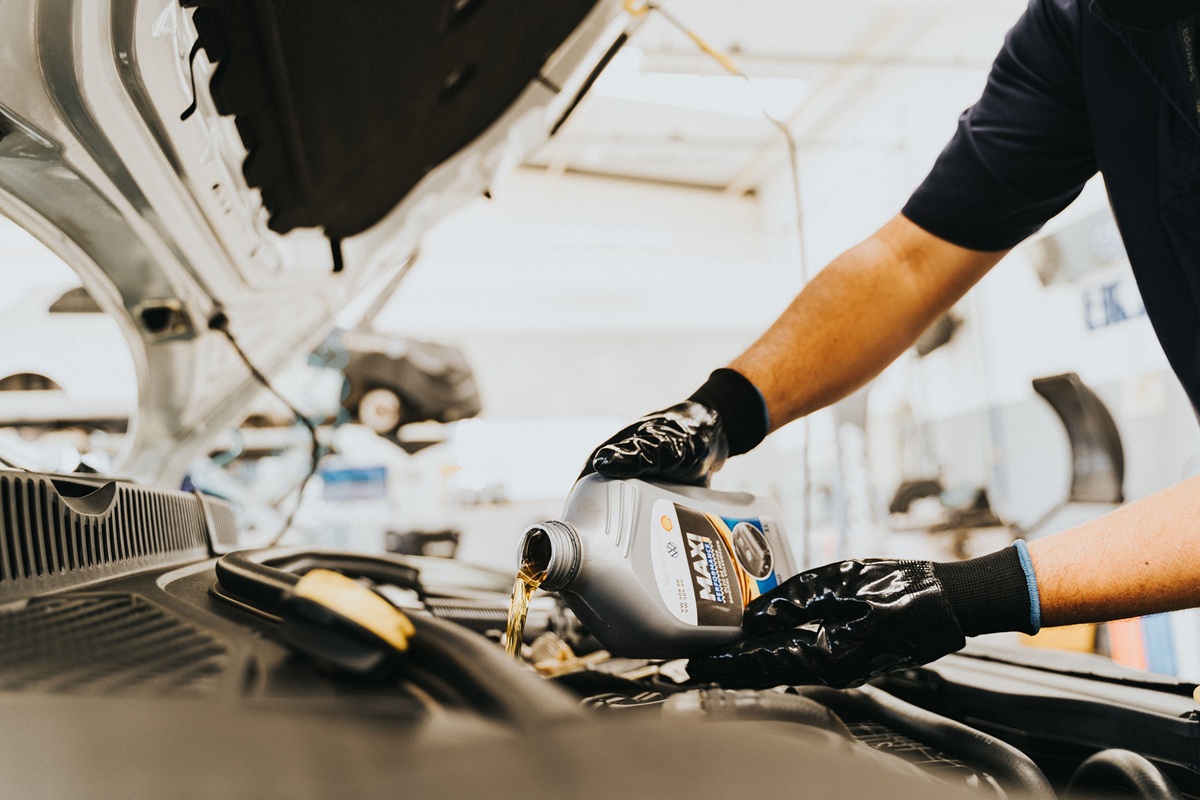
Conventional oil hasn’t disappeared, and for some drivers it’s still the right call. Older vehicles, work trucks with simple engines, fleet vans that rack up predictable highway miles, classic cars that only come out on weekends, and budget-conscious owners all have good reasons to stick with it. For a mechanic running a small shop or a homeowner who changes their own oil in the driveway, conventional remains a familiar, affordable, and perfectly functional choice. The catch is that conventional oil demands more frequent attention than its synthetic cousin, and that reality shapes every maintenance decision that follows.
According to Meineke Car Care, conventional oil typically needs replacing between 3,000 and 5,000 miles because it breaks down faster than synthetic formulations. That shorter lifespan isn’t a flaw so much as a tradeoff for a lower price per quart. Conventional oil is refined directly from crude, which means it contains more impurities and less uniform molecules than synthetic blends engineered in a lab. Under heat and pressure, those molecules shear, oxidize, and eventually lose their ability to lubricate properly. The General insurance company offers a slightly more generous range, noting that conventional oil should be swapped every 5,000 to 7,500 miles or at the six-month mark, whichever comes first. The six-month rule matters even for drivers who barely use their car, because oil degrades through exposure to moisture, oxygen, and temperature swings whether the engine is running or not.
How to Know If Conventional Is Right for You
If your vehicle was built before roughly 2010, has high mileage, or came factory-filled with conventional oil, sticking with the same type is usually the safe choice. Switching an older engine to full synthetic won’t hurt it, but it may expose old seals that were happy leaking a little conventional oil and suddenly start leaking synthetic through tighter tolerances. Owners of older pickups, early-2000s sedans, and workhorse SUVs often report fresh drips on the driveway within weeks of switching, which is less a failure of synthetic and more a sign that aging gaskets were already compromised. In those cases, the cost of resealing an engine quickly erases any savings from longer intervals.
Short trips, dusty roads, towing, stop-and-go city driving, and extreme hot or cold temperatures all count as severe driving conditions. If that describes you, lean toward the shorter end of the conventional interval regardless of what the standard schedule suggests. A delivery driver doing dozens of short hops a day, a contractor hauling tools and trailers through summer heat, or a rural driver on gravel roads will push conventional oil past its limits faster than a commuter logging steady highway miles. For fleet operators, this is where disciplined maintenance habits — including a daily pre trip inspection checklist that covers oil level, color, and visible leaks — becomes the difference between catching a problem early and rebuilding an engine later. Even for a single personal vehicle, a quick monthly dipstick check pairs well with the shorter conventional interval and keeps small issues from becoming expensive ones.
Synthetic Oil Schedules Explained
Full synthetic oil is engineered at the molecular level, which lets it hold up to heat, pressure, and contamination far longer than conventional. The base stocks are built from uniform molecules rather than the irregular chains you find in refined crude, and that uniformity means less friction, less evaporation at high temperatures, and far better resistance to the kind of oxidation that turns oil into sludge. That’s why modern vehicles have stretched their service intervals so dramatically, and why automakers feel confident putting their warranty reputations behind those longer numbers.
Consumer Reports notes that many automakers now specify oil changes at 7,500 or even 10,000 miles, and every six or twelve months. That’s a huge jump from the old 3,000-mile standard, and it reflects both better oil and tighter-tolerance engines. Piston rings seal more precisely, bearings run on thinner oil films, and fuel injection systems dump less raw gasoline into the crankcase than carbureted engines ever did. All of that means the oil is asked to do less dirty work over the same distance. The trend is only accelerating. Per CarMatcher.ca, roughly 73% of new vehicles sold in the United States in 2026 arrive factory-filled with full synthetic and come with extended service schedules baked into their maintenance plans.
The common synthetic intervals look like this:
- 5,000 to 7,500 miles for severe-service driving conditions
- 7,500 to 10,000 miles for normal driving
- 10,000 to 15,000 miles for certain European vehicles with specialized formulations
- 12 months maximum regardless of mileage for low-use vehicles
- Whatever the oil life monitor says, if your car has one
Severe service isn’t just off-road abuse, either. It covers short trips under 10 miles in cold weather, stop-and-go city traffic, towing, dusty roads, and extended idling, which is exactly how a huge share of drivers actually use their vehicles. If any of that sounds like your daily commute, lean toward the shorter end of the range even with synthetic. European intervals tend to run longer because those cars often hold six or seven quarts of a Euro-spec oil like ACEA C3, which has a larger reserve to work with and tighter additive requirements.
Trusting the oil life monitor is key here. Modern systems track actual engine conditions rather than just counting miles, so they give a much more accurate picture of when your oil is genuinely tired. They factor in cold starts, RPM ranges, coolant temperature, trip duration, and load, then calculate remaining oil life as a percentage. Pair that monitor with routine Maintenance habits — a glance at the dipstick every few fuel stops, a quick look under the car for leaks, and the same walkaround discipline you’d use on a daily pre trip inspection checklist — and you’ll catch problems long before the oil itself becomes the issue.
Solving the Driving-Style Problem
Here’s a problem most drivers never consider: the manufacturer’s “normal” schedule often doesn’t match how people actually drive. Short commutes under ten miles, stop-and-go traffic, cold-weather starts, and idling all qualify as severe service in most owner’s manuals, yet most drivers assume they fit the normal category.
If your engine rarely gets fully warmed up, moisture and fuel residue build up in the oil faster than it can burn off. That means even premium synthetic oil degrades more quickly than the mileage suggests. The solution is to honestly assess your driving pattern and pick the severe-service interval if more than half your trips are short, cold, or stuck in traffic.
Matching Intervals to Real-World Use
A retiree who drives twelve miles to the grocery store twice a week is actually harder on oil than a commuter who racks up highway miles every day. Highway driving keeps the engine at steady operating temperature, which is exactly what oil prefers. City driving does the opposite, and your schedule should reflect that reality rather than the marketing copy on the oil bottle.
Upkeep Habits That Protect Your Engine

Oil changes don’t happen in a vacuum. The overall health of your vehicle depends on dozens of small checks that catch problems before they cascade into expensive repairs. Regular Maintenance between oil changes is what separates a car that reaches 250,000 miles from one that dies at 120,000.
Fleet drivers already know this, which is why their routines include a daily pre trip inspection checklist covering fluids, tires, belts, and warning lights before the vehicle ever leaves the yard. Personal drivers benefit from a scaled-down version of the same habit, even if it’s just a monthly walk-around with a flashlight.
Build these quick checks into your routine between oil services:
- Pop the hood once a month and check oil level on a cold engine
- Scan the ground under your parking spot for drips or stains
- Watch for new engine noises, especially ticking at startup
- Keep an eye on the oil life monitor or mileage countdown
- Note any changes in fuel economy that might signal a bigger issue
Catching a slow leak or a failing gasket early can save an engine. Ignoring it until the oil light comes on usually means the damage is already done.
When to Break the Schedule
Sometimes the right move is to change oil earlier than planned. If you’ve just finished a cross-country trip with heavy loads, spent a summer towing a trailer, or driven through flood water deep enough to splash the undercarriage, don’t wait for the next scheduled service. Fresh oil is cheap insurance after unusual stress.
The same applies after major engine work. Any repair that opens up the crankcase, replaces a timing component, or disturbs the oiling system deserves a fresh fill shortly after, even if the current oil only has a few hundred miles on it. Contaminants from the repair can shorten oil life dramatically.
On the flip side, don’t change oil early just out of nostalgia for the 3,000-mile rule. If your manufacturer says 10,000 miles on synthetic and you’re driving under normal conditions, doing it at 5,000 doesn’t help the engine. It just adds cost and waste.
Closing Thoughts
Oil-change intervals aren’t a one-size-fits-all number, and the right answer depends on your oil type, your engine, and the way you actually use your vehicle. Conventional oil generally needs attention every 3,000 to 7,500 miles, while modern synthetic can comfortably stretch to 7,500 or 10,000 miles in most cars, and even further in some European models.
The biggest mistakes drivers make are clinging to outdated rules, ignoring severe-service conditions, and trusting windshield stickers over their owner’s manual. Match your schedule to your actual driving, pay attention to oil life monitors, and don’t be afraid to swap oil early after unusual stress on the engine.
Do that consistently, and you’ll get the full lifespan out of both your oil and your motor without wasting a dollar on service you didn’t need. Your engine will run cleaner, your wallet will stay fuller, and you’ll have one less thing to argue about at the garage counter.