For truck owners, maintaining a reliable vehicle is both a point of pride and a practical necessity. Whether you use your truck for daily commuting, heavy towing, off-road adventures, or commercial hauling, keeping it in peak mechanical condition is essential. When a warning light illuminates on the dashboard or an unfamiliar clunking sound echoes from under the chassis, the immediate question arises: Can I fix this in my home garage over the weekend, or is it time to take the keys to a certified mechanic?
The temptation to perform do-it-yourself maintenance is understandable. Modern video tutorials, online forums, and aftermarket parts availability make home mechanical work more accessible than ever. Tackling minor repairs yourself can save money on labor costs and build valuable technical self-reliance. However, modern trucks are increasingly complex machines equipped with high-pressure fuel systems, intricate electronic control modules, advanced safety sensors, and heavy-duty drivetrain components that operate under immense stress.
Evaluating Safety Hazards and System Criticality

Safety must always serve as your primary filter when determining whether a repair belongs in a home garage. Every mechanical system on a truck carries some degree of risk, but certain components are directly tied to driver control, vehicle stability, and occupant survival. Failing to service a critical system correctly can lead to catastrophic mechanical failure at highway speeds.
Brake systems, steering linkages, and suspension components represent the most critical safety hardware on your truck. While changing brake pads on a light-duty pickup might seem straightforward, modern anti-lock braking systems (ABS), electronic stability control modules, and integrated trailer brake controllers require precise servicing procedures. Improperly bleeding an ABS hydraulic control unit or misaligning caliper hardware can introduce air pockets or uneven hydraulic pressure, compromising stopping distance when carrying heavy loads.
When your vehicle experiences severe pedal pulsation, fluid loss, or pulling during braking, seeking certified local brake repair ensures that hydraulic lines are pressure-tested, rotors are measured for minimum thickness, and safety sensors are properly calibrated.
Working under heavy-duty trucks presents inherent physical hazards. Standard automotive floor jacks and jack stands designed for light passenger cars are frequently undersized for three-quarter-ton or one-ton pickups, especially when loaded with service bodies or heavy cargo. Lifting a heavy truck safely requires rated hydraulic equipment, solid concrete leveling, and proper wheel chocking. Never place yourself beneath a raised vehicle supported solely by a hydraulic jack.
Roadside breakdowns present extreme safety risks. Attempting to diagnose severe mechanical failures or perform complex component teardowns along the shoulder of a busy highway or rural road exposes you to passing traffic and dangerous environmental conditions. When a truck suffers a sudden breakdown, heavy engine overheating, or complete power loss in transit, securing a professional towing service to transport the vehicle safely to a equipped repair facility is always the smartest, safest first step.
- Categorize safety-critical systems: Separate routine maintenance items from high-risk components like hydraulic steering, suspension arms, and brake assemblies.
- Audit lifting equipment weight ratings: Ensure your floor jacks and jack stands exceed your truck’s actual gross vehicle weight before working underneath.
Auditing Tool Availability, Diagnostics, and Technical Expertise
The boundary between a successful home repair and a frustrating mechanical dead-end usually comes down to two factors: specialized tools and diagnostic capability. Modern trucks rely heavily on computerized networks where physical symptoms are often driven by underlying electronic or sensor failures.
Basic handheld OBD-II code scanners available at local auto parts stores can read generic trouble codes, but they rarely provide the deep diagnostic data needed to pinpoint complex issues. Professional mechanics utilize advanced bidirectional diagnostic scan tools capable of reading manufacturer-specific modules, monitoring real-time sensor data streams, performing component actuation tests, and recalibrating electronic modules after parts are replaced. Without these advanced diagnostic tools, DIY mechanics often resort to “parts cannon” troubleshooting—replacing perfectly good sensors and components sequentially in hopes of accidentally fixing the root cause.
Specialized physical tools present another hurdle. Many heavy-duty truck repairs require specialized equipment, such as bearing presses, torque multipliers, heavy-duty ball joint pullers, precision micrometer gauges, and calibrated torque wrenches capable of exceeding 300 foot-pounds.
Before committing to a project, audit the total cost of purchasing the specialized tools required for the job. If buying a single-use specialty tool costs nearly as much as the professional labor charge, handing the job over to a shop is far more practical.
Determining when a maintenance item exceeds basic home capabilities requires an honest assessment of your technical training and experience. Swapping out a clogged engine air filter, changing wiper blades, or replacing an accessible alternator are ideal DIY projects.
However, when routine maintenance escalates into complex electronic troubleshooting, intake manifold removal, or deep engine servicing, scheduling professional truck services ensures that factory procedures and exact torque specifications are followed. Establishing a relationship with reputable local auto shops before emergency failures occur gives you a reliable partner when a project exceeds your home shop’s capabilities.
- Evaluate diagnostic software limits: Recognize that generic code readers cannot execute module recalibrations or advanced sensor diagnostics.
- Calculate true tool investment costs: Compare the price of purchasing single-use specialty tools against professional shop labor rates.
Assessing Drivetrain and Complex Mechanical Failures

The drivetrain—comprising the engine, transmission, transfer case, driveshafts, and differentials—contains the most intricate and highly stressed mechanical assemblies in your truck. These components operate under extreme internal pressures, high thermal loads, and tight manufacturing tolerances. When drivetrain components fail, the repairs are rarely simple or cheap.
Transmissions present some of the most challenging mechanical work on any vehicle. Modern automatic transmissions feature complex valve bodies, delicate solenoid packs, multi-clutch packs, and integrated planetary gear sets controlled by dedicated computer modules.
Symptoms like slipping gears, harsh shifting, delayed engagement, or metal shavings in the pan indicate internal wear or fluid pressure loss. Attempting internal transmission repairs without specialized clean-room environments, hydraulic pressure gauges, and deep technical training frequently results in complete unit destruction.
Major driveline assemblies, such as front and rear differentials, also require meticulous precision. Replacing ring and pinion gears, setting pinion depth, adjusting side-bearing preload, and measuring backlash requires specialized shimming tools and dial indicators accurate to thousandths of an inch. An error of just a few thousandths of an inch in differential gear setup will cause severe gear whine, rapid tooth destruction, and catastrophic rear-end lockup under heavy load.
When evaluating severe engine or drivetrain issues, consider the risk of secondary damage. A misdiagnosed cylinder misfire can destroy expensive catalytic converters or diesel particulate filters (DPF). A leaking fuel injector on a modern diesel engine can wash cylinder walls of oil, leading to piston seizure and total engine failure. Leaving complex internal mechanical work to experienced specialists protects your core powertrain assets.
- Identify internal transmission warning signs: Take slipping, grinding, or delayed gear engagement to specialists immediately to prevent total failure.
- Leave gear lash setups to experts: Avoid setting up differential ring and pinion gears without specialized precision measuring instruments.
Identifying Structural, Frame, and Exterior Sheet Metal Damage
Whether resulting from a low-speed parking lot scrape, a job-site collision, or years of exposure to road salt, body and frame damage requires a specialized set of skills and equipment to repair correctly. While bolting on a replacement plastic bumper cover or swapping a tail light assembly is well within most owners’ comfort zone, structural and cosmetic bodywork quickly becomes complex.
Modern truck cabs and beds are constructed from a mix of high-strength steel, aluminum alloys, and composite materials. Repairing a dented aluminum door or fender requires completely different tools, welding techniques, and shaping methods than traditional steel panels. Applying standard retail body filler over deep panel damage or rusted metal without proper rust mitigation and metal shaping is a temporary fix that will quickly crack, bubble, and fall out.
Structural frame integrity is even more critical. Minor impacts can subtly twist, diamond, or bend hydroformed frame rails. Operating a truck with a compromised frame leads to uneven tire wear, poor vehicle handling, door misalignment, and severely weakened crash protection in future impacts.
Properly diagnosing and repairing frame damage requires specialized laser measuring systems and heavy-duty hydraulic frame racks capable of pulling high-strength steel back into factory alignment.
Restoring your truck’s exterior appearance to factory standards also requires climate-controlled paint application. Achieving a seamless color match and durable clear-coat finish requires professional paint-mixing computers, specialized spray guns, and dust-free spray booths. Contracting a licensed auto body repair facility guarantees that structural safety zones are preserved and corrosion protection is applied correctly. Partnering with established local body shops ensures that minor cosmetic damage or collision repairs are handled with professional craftsmanship that preserves your vehicle’s resale value.
- Inspect frame alignment after impacts: Look for uneven body gaps or unusual tire wear patterns that indicate frame rail displacement.
- Avoid mixing metal repair techniques: Never use steel repair tools or traditional techniques on aluminum panels to prevent cross-contamination.
Managing Road Contact, Wheel Alignments, and Tire Hazards
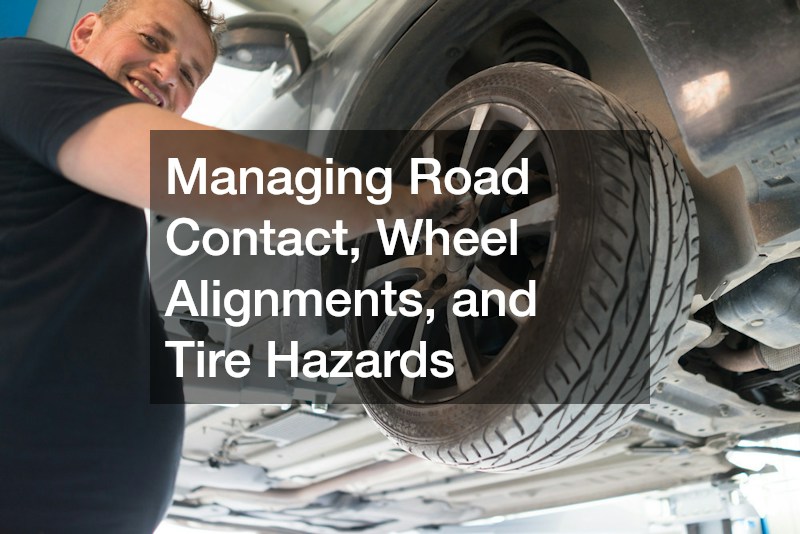
Your truck’s tires and wheels are the only contact points connecting your multi-ton vehicle to the road surface. Maintaining proper tire wear, wheel balance, and alignment is vital for vehicle safety, fuel economy, and steering response, especially when hauling heavy payloads or towing trailers.
Evaluating tire wear patterns provides deep insight into the health of your truck’s steering and suspension systems. Cupping, feathering, or heavy wear along one edge of the tire tread indicates worn ball joints, bad tie rod ends, loose wheel bearings, or improper wheel alignment.
While you can easily replace worn suspension components in your driveway, you cannot perform an accurate four-wheel alignment at home with basic tape measures. Modern trucks require computerized alignment racks to adjust camber, caster, and toe angles to precise factory specifications.
Servicing heavy-duty tires presents distinct physical hazards. Mounting and demounting large truck tires from steel or aluminum rims requires commercial tire machines and bead breakers. Attempting to pry heavy truck tires off rims manually with tire irons frequently damages rim flanges, cuts bead rubber, and risks personal injury from sudden air pressure releases.
When a tire suffers a puncture, puncture location determines whether a safe repair is possible. Punctures occurring within the central tread area can often be repaired using a combination internal patch-plug, but punctures on or near the tire shoulder and sidewall cannot be safely repaired.
Arranging prompt truck tire repair through a qualified service center ensures that tires are demounted, inspected internally for cord damage, and repaired or replaced in accordance with strict industry safety guidelines.
- Read tire tread wear patterns: Use irregular wear patterns to identify underlying steering and suspension component wear.
- Schedule computerized wheel alignments: Always get a professional alignment after replacing steering components or lifting a truck.
Weighing Warranty Guarantees, Downtime Costs, and Asset Value
Deciding whether to tackle a repair yourself should not be based solely on technical capability; it also requires a clear-eyed financial analysis. Taking a holistic view of vehicle ownership means factoring in warranty protections, opportunity costs, vehicle resale value, and operational downtime.
If your truck is covered by a factory powertrain warranty, an extended service contract, or a certified pre-owned warranty, performing major DIY repairs can be a risky financial move. While the Magnuson-Moss Warranty Act protects consumers from having warranties voided simply for performing basic maintenance, major uncertified teardowns or improper installations that lead to component failures can give manufacturers legal grounds to deny warranty claims.
Before touching any major system under warranty, review your coverage terms or consult your dealer’s service department.
Downtime cost is another major consideration, particularly for business owners who rely on their trucks for daily income. If spending three days struggling through a complex DIY repair in your garage keeps your work truck off the job site, the lost revenue from your business will quickly exceed the cost of professional shop labor. Professional repair facilities have access to specialized tools, multiple technicians, and direct parts supply chains, allowing them to complete complex jobs far faster than a DIY mechanic working alone.
Maintaining complete service records is essential for preserving your truck’s resale value. Future buyers and dealership appraisers value vehicles with clear, documented service histories from certified facilities.
Partnering with established auto services providers for routine maintenance and major repairs creates a verified digital paper trail that proves your truck was properly maintained throughout its life. Ultimately, evaluating major truck repairs based on long-term value rather than immediate savings ensures your vehicle remains safe, reliable, and financially productive for years to come.
- Review active warranty coverage terms: Confirm whether DIY work on specific systems risks invalidating factory or extended warranties.
- Calculate lost business revenue: Factor the financial cost of vehicle downtime into your repair decisions if you use your truck for work.
Making the Smart Choice for Your Truck
Determining whether a truck repair requires a professional comes down to a balance of safety, capability, tools, and economics. There is great satisfaction in maintaining your own vehicle, and handling basic maintenance items yourself is an excellent way to connect with your machine and save money over time.
However, true mechanical wisdom lies in recognizing your limits. When a repair involves critical safety systems, specialized computerized diagnostics, or structural frame alignment, stepping back and trusting the job to professionals is the smartest decision you can make.